Ashworth Honey: All things honey bee in South Hampshire
From egg to jar…
You can click on images to see more detail!
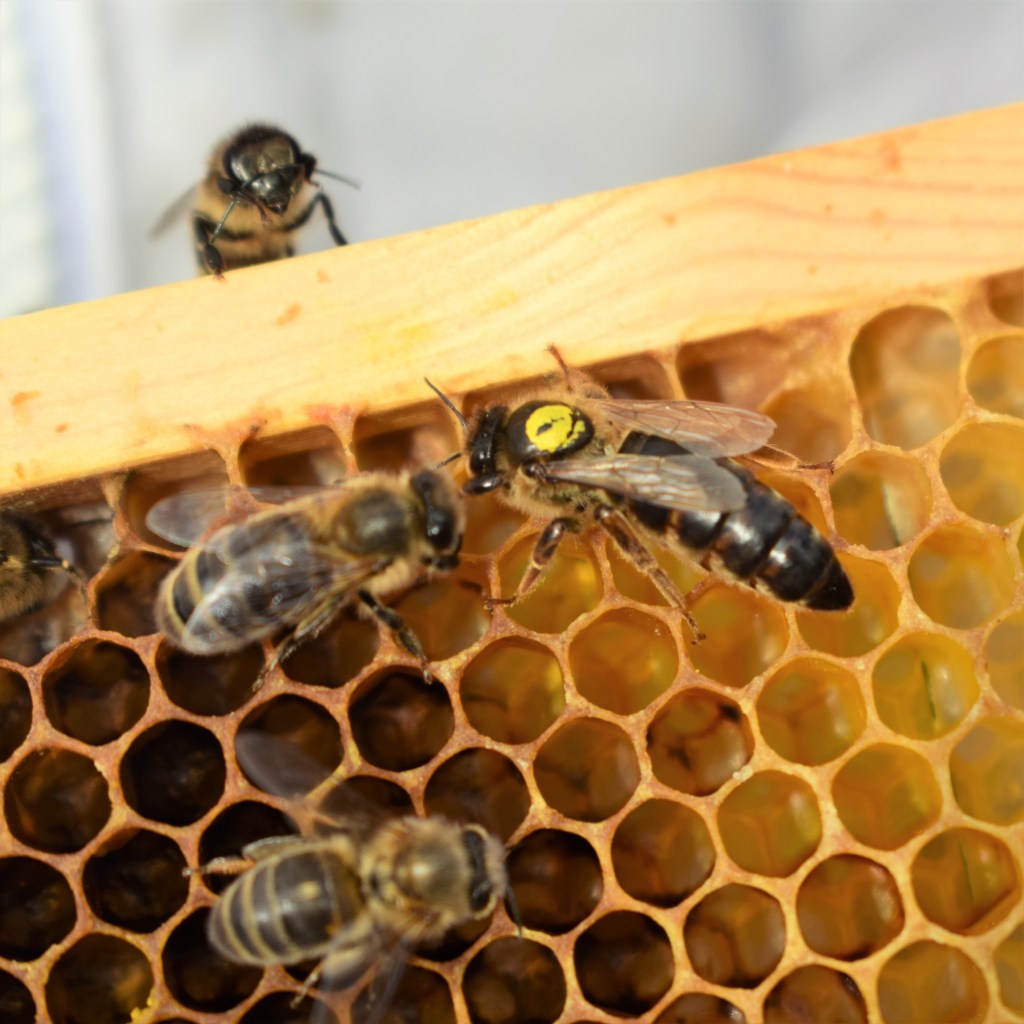
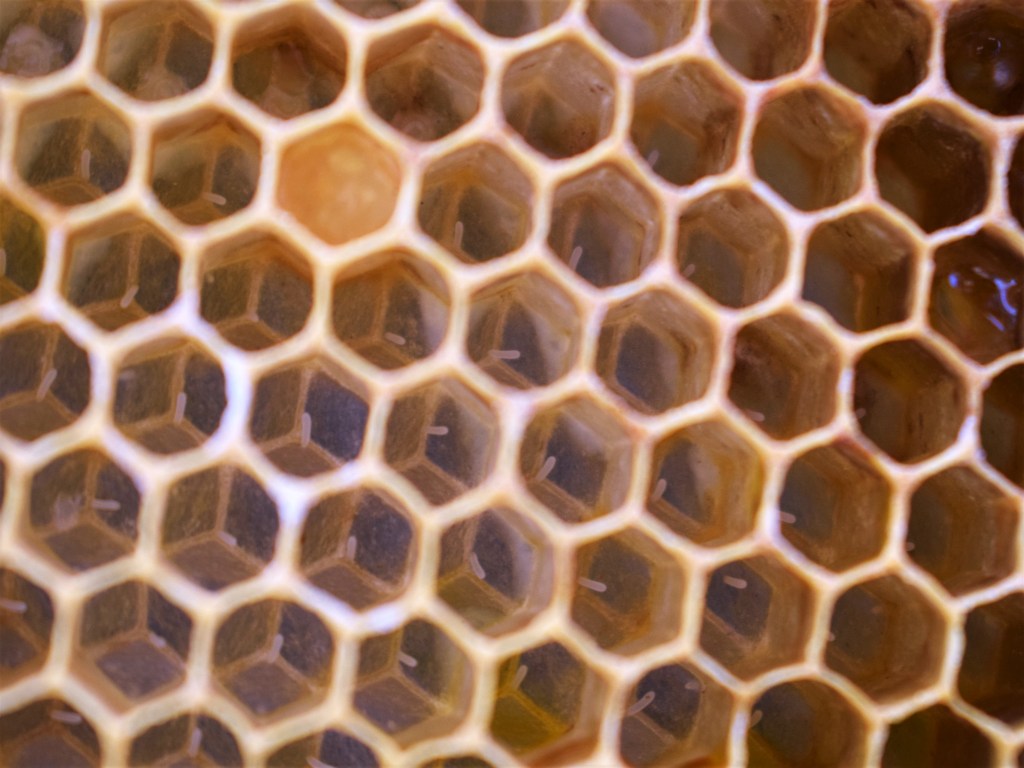
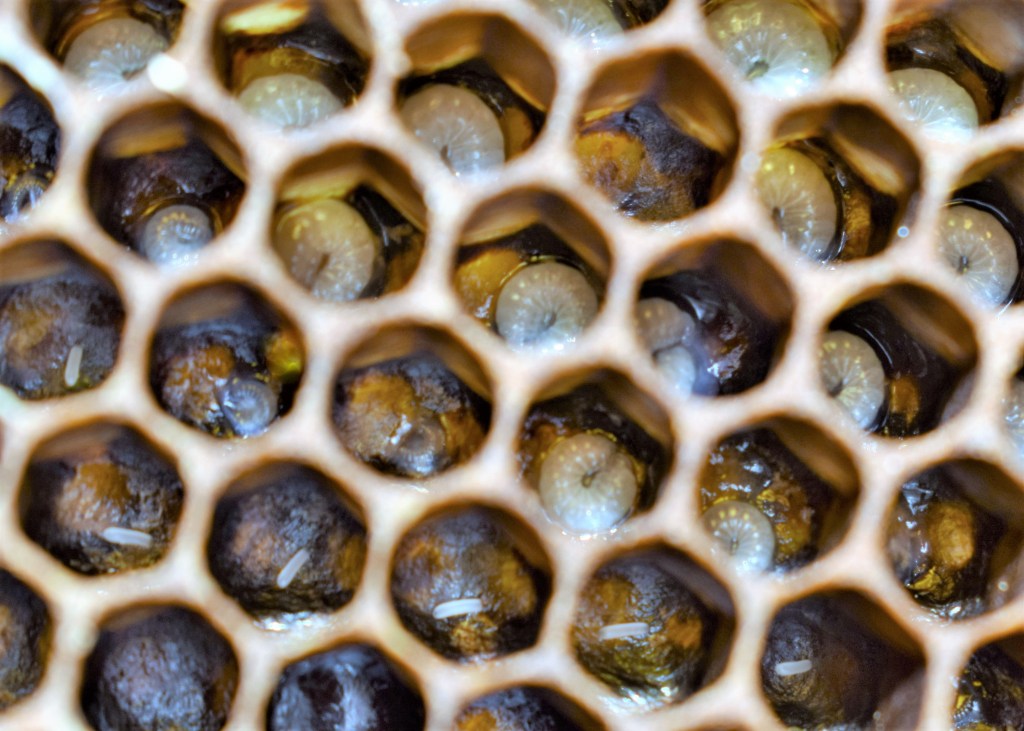
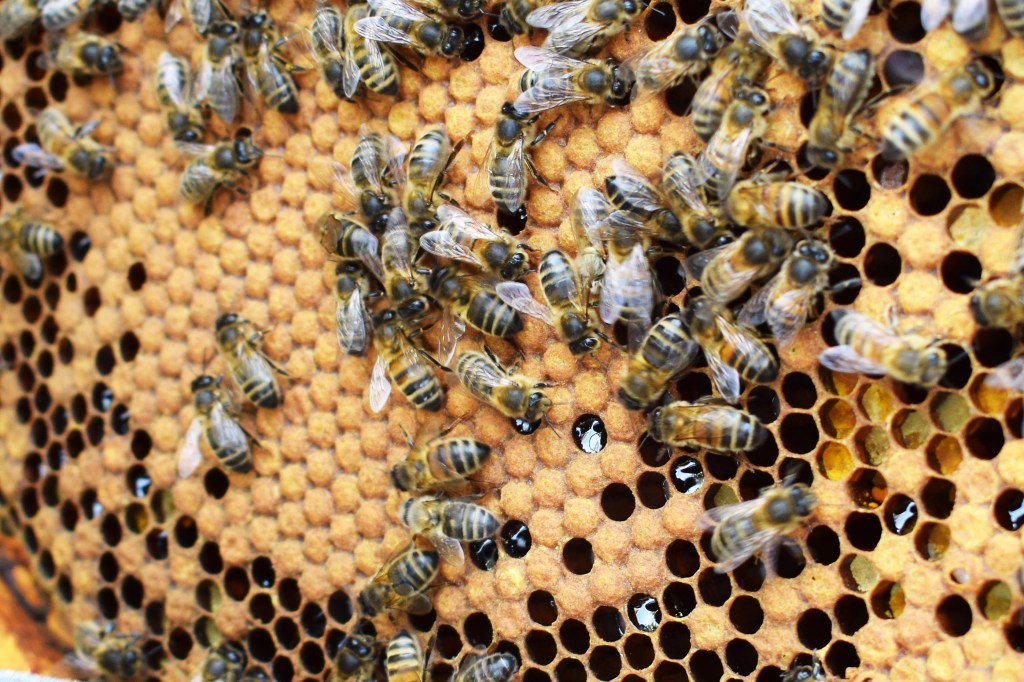
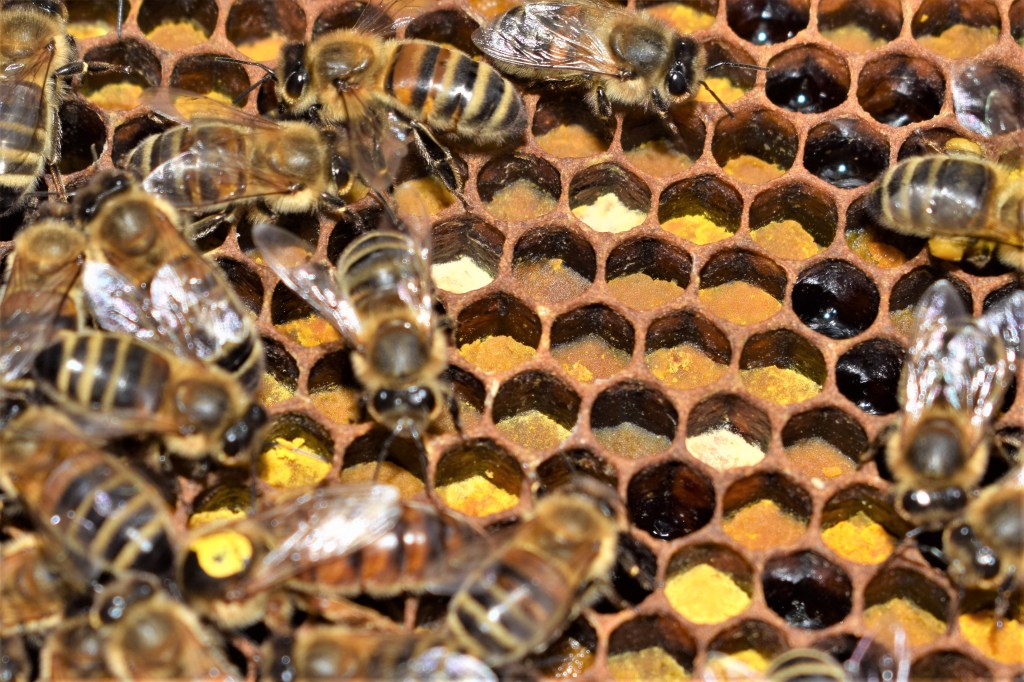
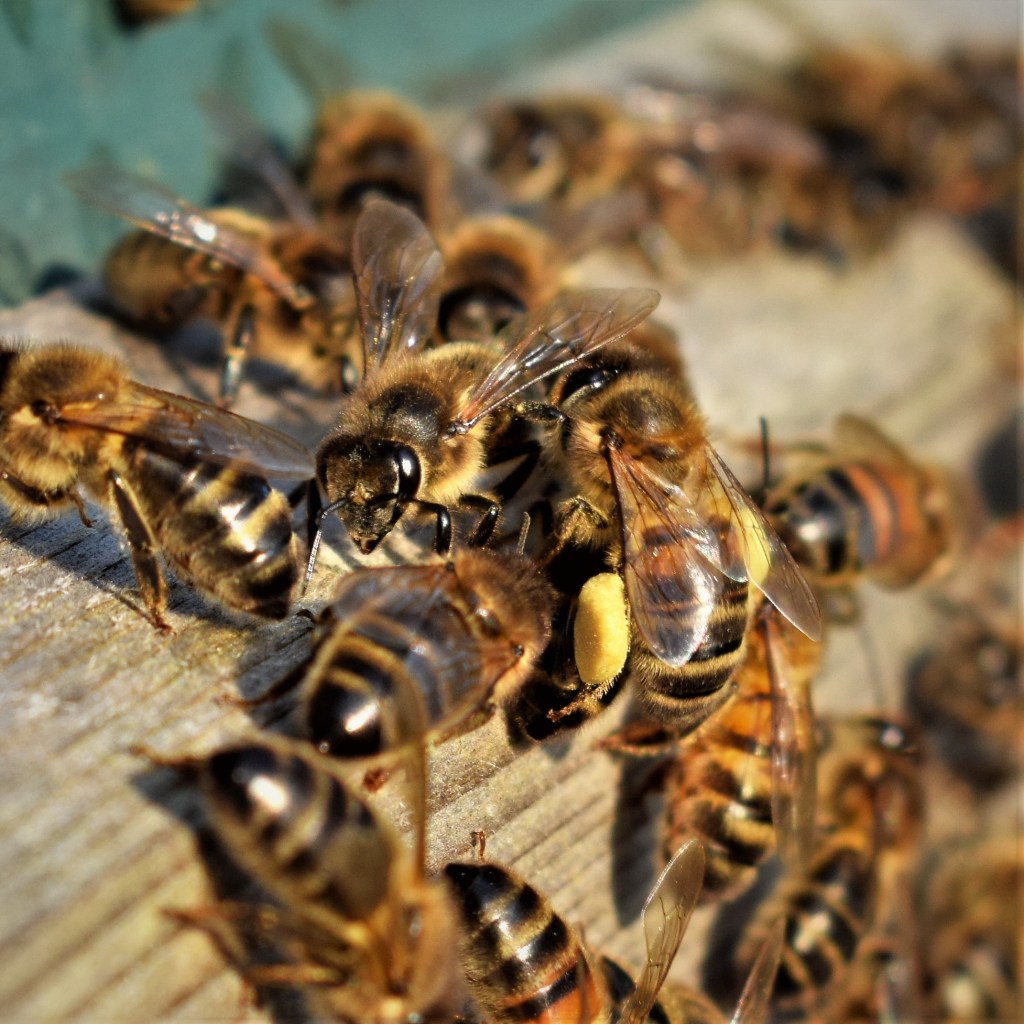
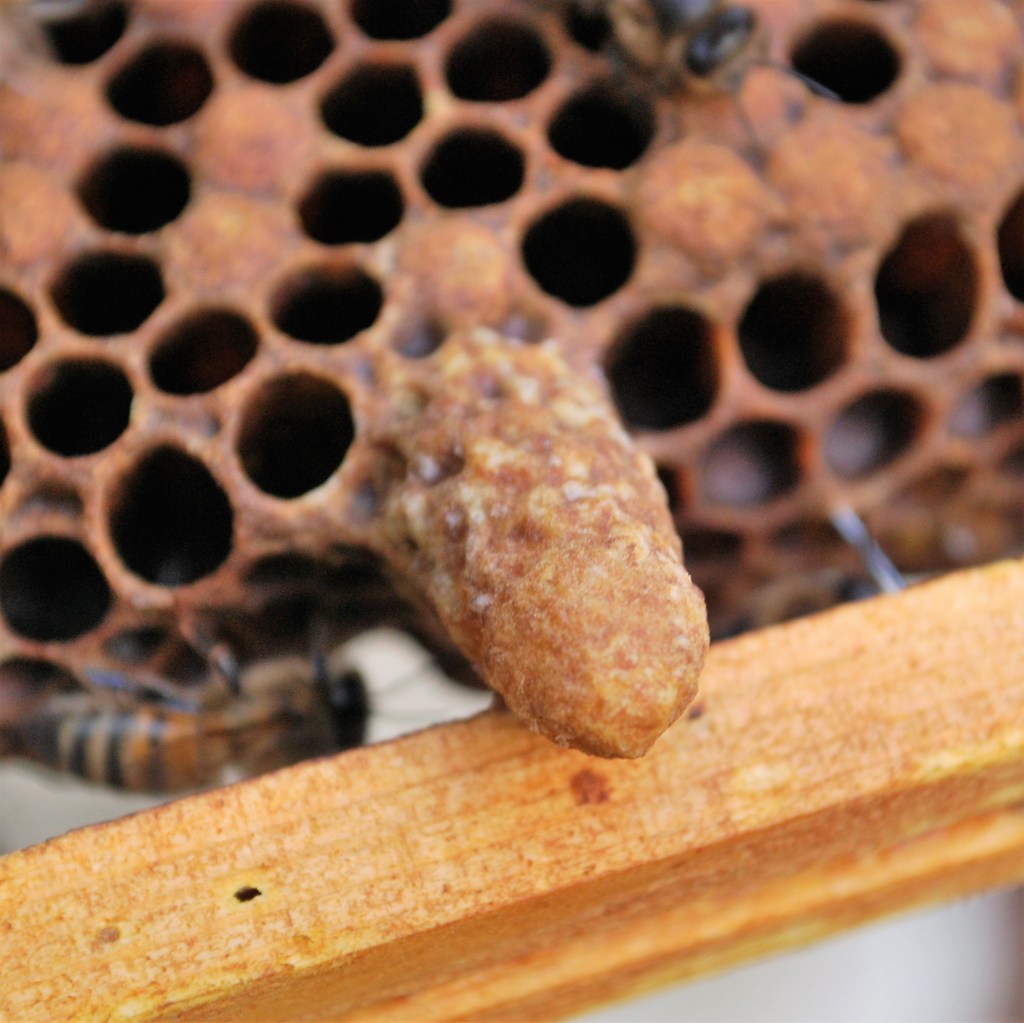
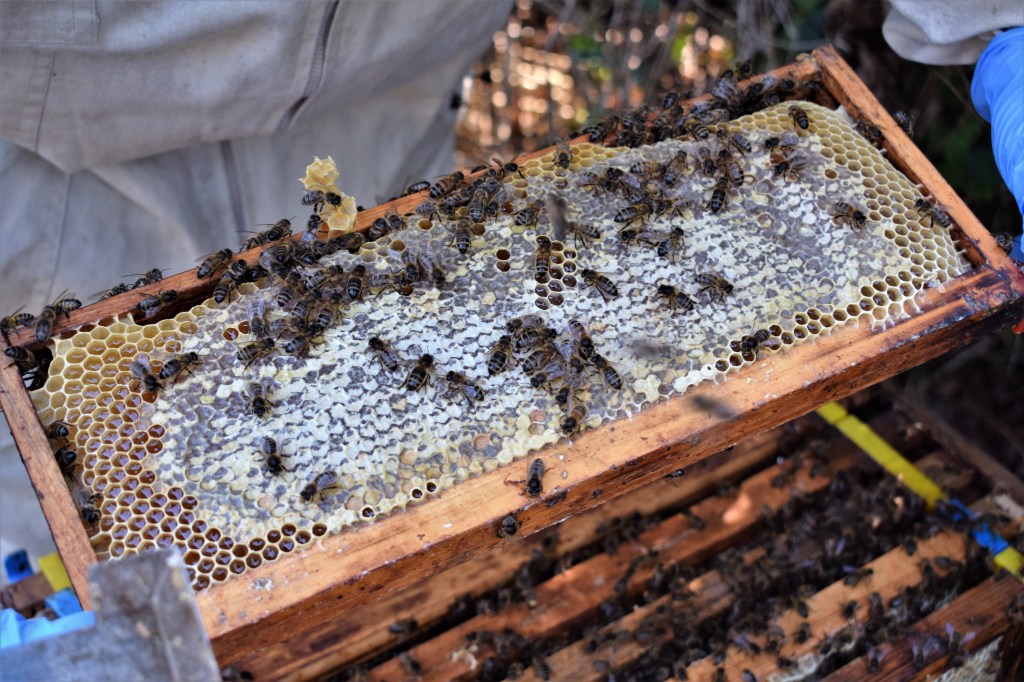
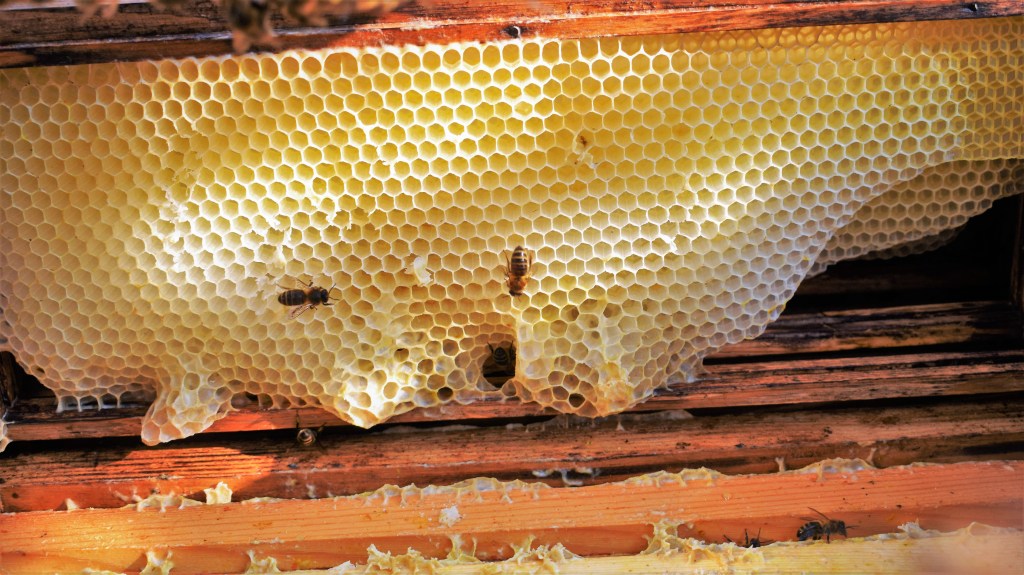
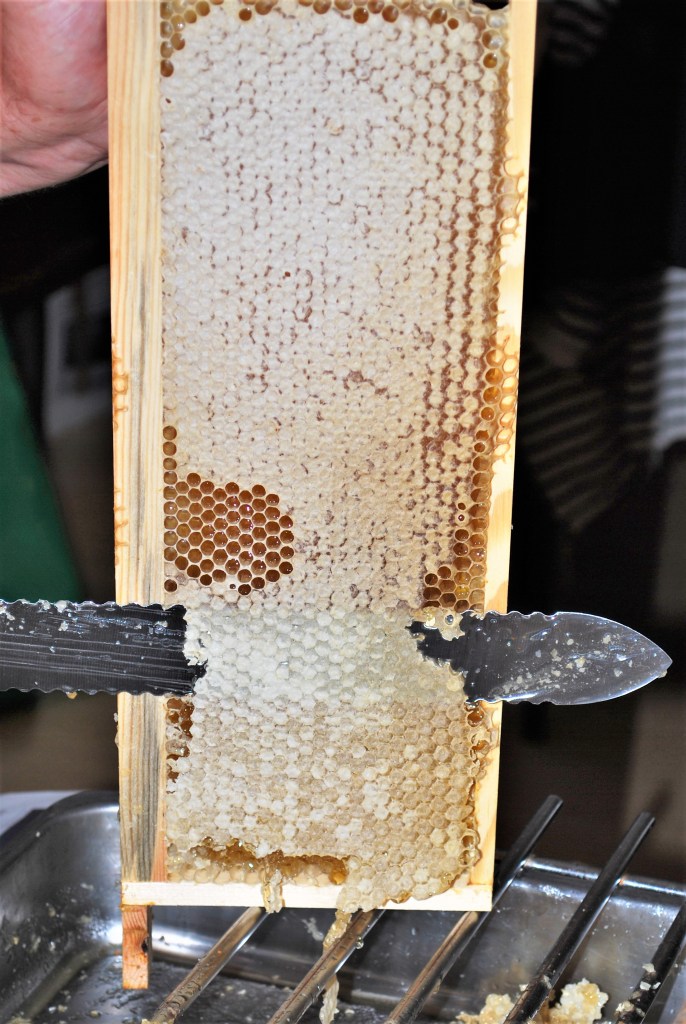
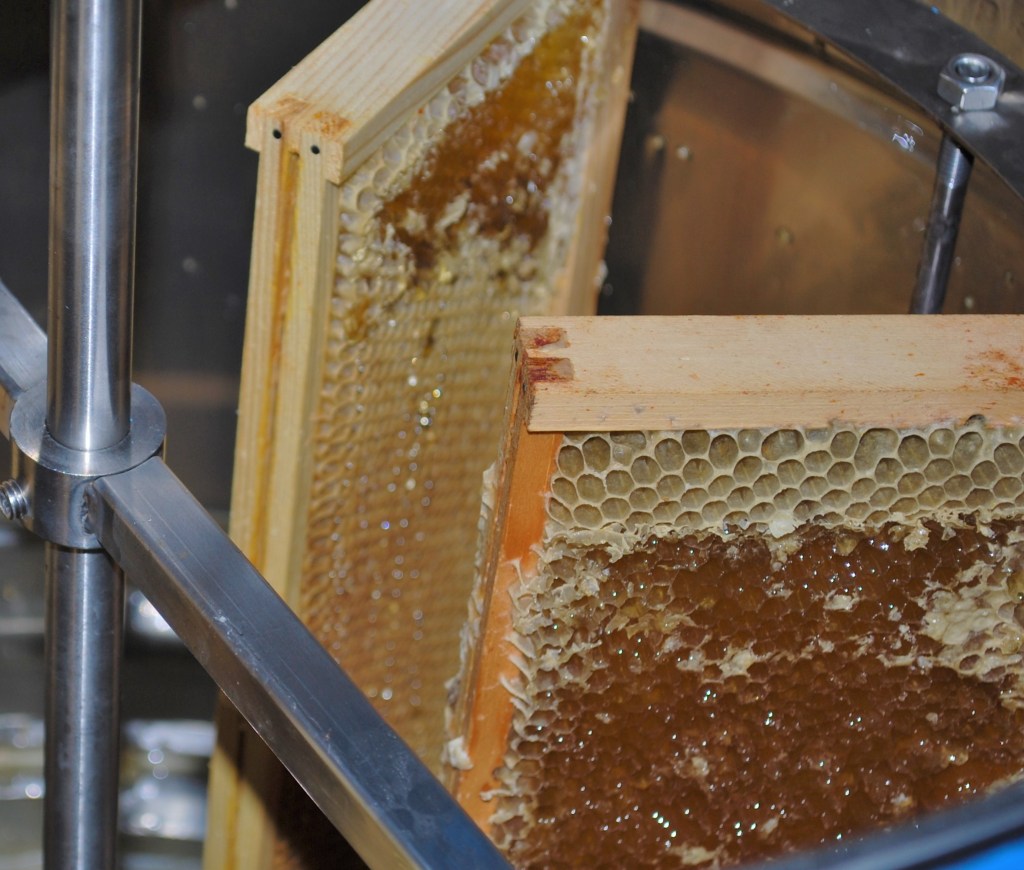
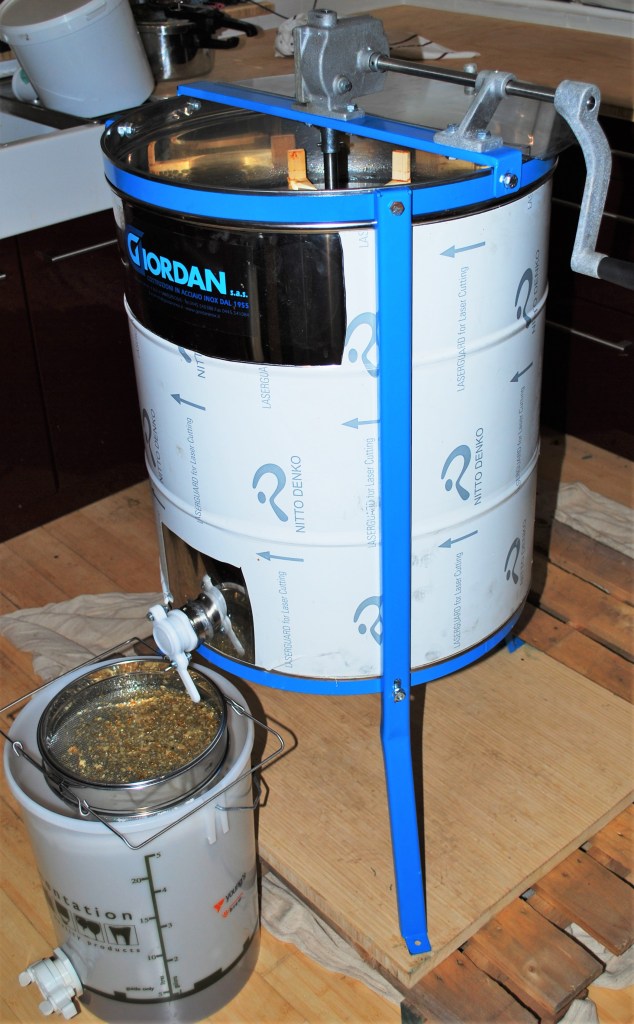
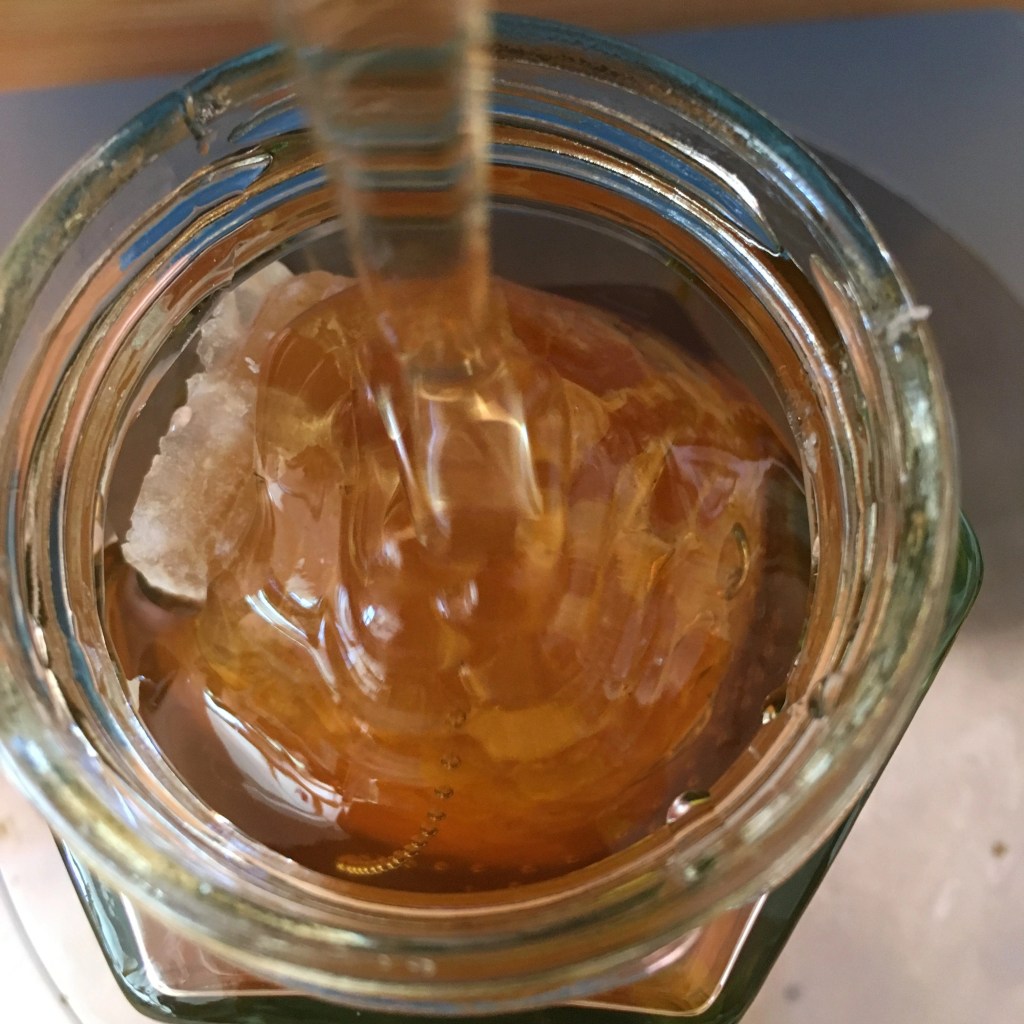
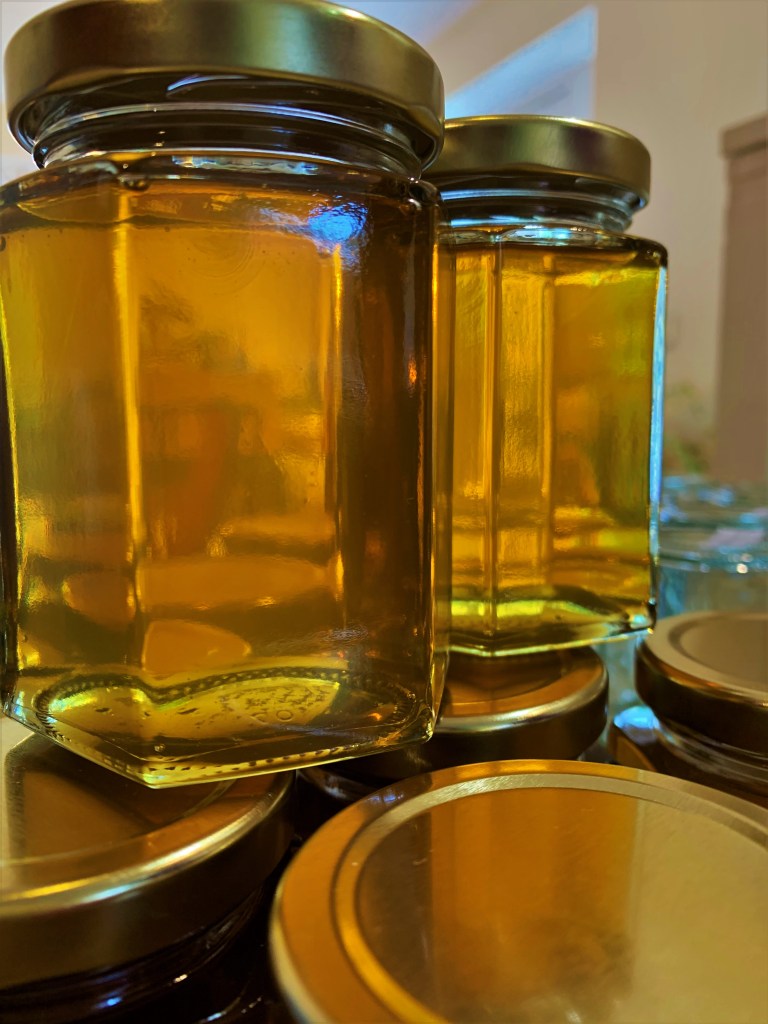
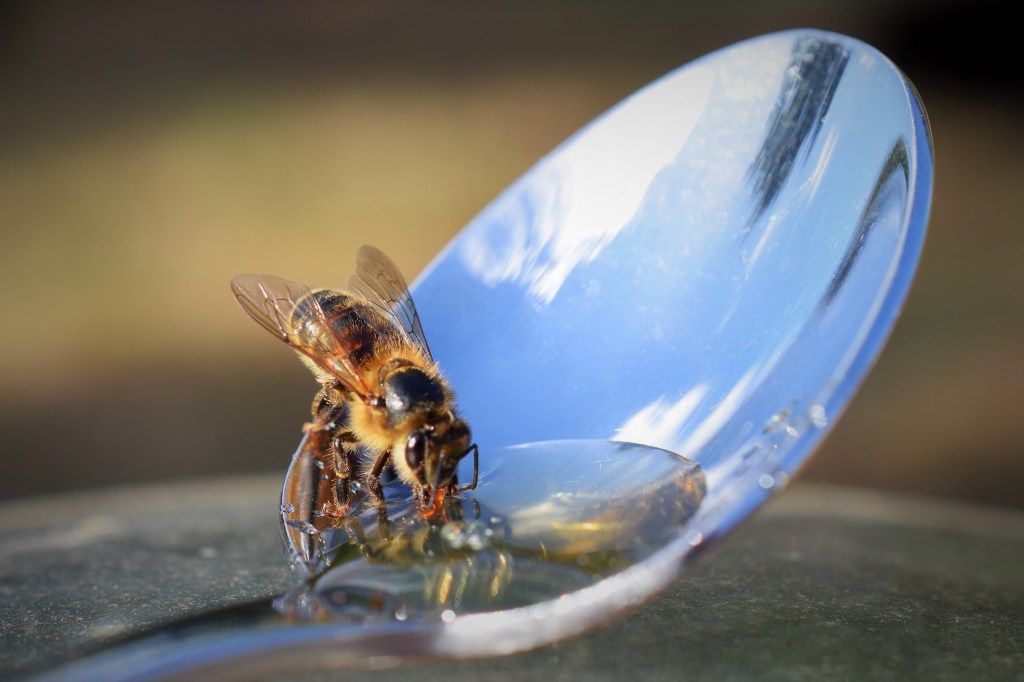
The queen is longer than workers and drones and is marked to show her ageEggs can be seen at the bottom of the honeycomb cellsEggs grow and transform into larvae after day 3The worker larvae are fed and covered with a wax lidWorkers collect pollen – the hive protein, fed to the queen and young.Pollen is collected and carried back to the hive in ‘baskets’ on the bees legsA sealed queen cell contains a future queen, a sign the current queen is old, or the hive is overcrowded and likely to swarmHoneybees collect nectar and place it in frames of honeycombThe comb is built by wax building bees. We provide a starter strip to encourage them to build in a manageable way. They still do their own thing though!Once the nectar reaches the correct water content (below 18%) the bees will cap the honeycomb with a thin layer of waxHoney cells being cappedTo extract the honey, we remove the cappingsThen spin the frames in an extractor to remove the honeyThe extractor drains through a coarse filter into a bucket ready for jarringThe filtered honey being poured over a piece of cut honeycomb for our jars of ‘Chunk honey’The jars are ready for labellingA single worker bee collects just one twelfth of a teaspoon of honey in her lifetime



 ashworthhoney.co.uk