
Things you might not know about honey bees…
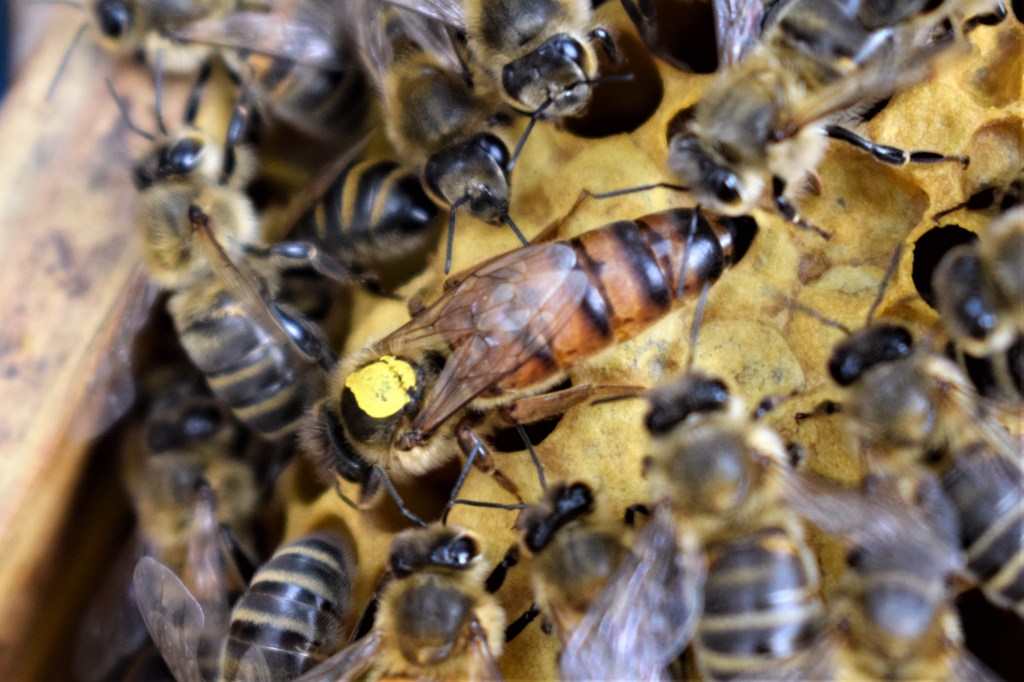
- A colony contains one queen, up to 60,000 female worker bees and a few hundred drones (males) in Summer, but just a queen, 5,000-10,000 workers and no drones in winter.
- A worker bee only lives for about 4-6 weeks during the productive year and will produce about 1/12 teaspoon of honey in that time.
- The queen chooses when to lay drone eggs in the Spring. They only have one job – to fertilise virgin queens, but die in the process.
- Any remaining drones are evicted by the workers in the Autumn and die. This is to preserve food stores for the workers and queen over Winter.
- A bee can fly at about 15mph (21km/h)
- A bee will die if it stings – the ultimate sacrifice for defending the colony.
- Honey bees have 5 eyes – 2 compound eyes and 3 ocelli eyes, which help the bee navigate. You can see them on the worker bees in the photo at the top of this page.
- Bees communicate with each other by performing a ‘waggle dance’. This lets other bees in the colony know about food sources and where to find them.
- Worker bees have 170 odorant receptors and can be trained to detect explosives or drugs as well as some human diseases.
- The bee’s buzz is created by their wings beating up to 200 times per second.
Things you might not know about honey…

- Honey bees will fly around 80,000 km to create one 454g jar of honey, collecting from over 2 million flowers.
- Nectar is up to 80% water. The colony will reduce this to below 20% in the hive before they can store it and we can legally call it honey.
- Honey = nectar + bee enzymes – water
- The colour, texture and flavour of honey is determined by the plant the nectar is collected from. The beekeeper can blend different honeys to change its appearance, texture and consistency. Commercially produced honey is usually a blend of honey from different countries and plant sources to provide an identical product in every jar, but artisan producers (like us) tend to keep our honey sources separate to give each batch unique flavours and consistency.
- Honey is antiseptic, slightly anaesthetic and contains vitamins, minerals, antioxidants and amino acids. It is also fat, cholesterol and sodium free.
- The NHS now recommend taking honey as an alternative to cough mixtures. Medicinal honey is used in would dressings and has been since WWI. Research is being undertaken in the UK on honey being used in treatments for many diseases, including cancer.
- Edible honey has been found in the tombs of Egyptian Pharaohs, but by law we have to include a best before date on any honey we sell.
- Heather honey is thixotropic – it is more like a jelly with bubbles and a slightly higher water content.
More factoids

- Ashworth Honey has been eaten in Spain, Japan and Antarctica.
- Honey bees also make all the wax they need for their hive, a sticky glue like substance called propolis to line brood cells and mend the hive, and royal jelly, fed to larvae destined to become queens.
All these products can be harvested for uses as varied as didgeridoo mouthpieces , creating batik art, furniture making, medicinal tonics and reducing friction on surfboards and sewing threads. It is also used as a lubricant on historic firearms amongst many other uses! - A standard modern hive consists of a floor, brood box (where the queen stays and lays eggs), a queen excluder, supers (where the honey is stored), crown board and roof. There are many different designs of hives used around the world, each with their own features.
- For every 3 beekeepers, there will be 4 opinions!
- Fermented honey, known as Mead, is the first recorded fermented beverage. The term honeymoon originated from the Norse tradition of consuming Mead during the first month of a marriage. They believed mead was the drink of the Gods.
- Beeswax is also used in cosmetics and sweet making.
- Bees secrete the beeswax from a gland on their abdomen. They then chew it (mastication) to be able to work the wax into cells of honeycomb.
- The colour of beeswax varies from nearly white through to dark brown, determined by the colour of pollen the bees have been in contact with and propolis which is used to sterilise honeycomb cells in the brood chamber of the beehive.
If you have enjoyed these bee facts, why not join us for a bee experience?
 ashworthhoney.co.uk